

APDI is a consortium of identity, payments, and travel-tech leaders working to build a trust framework that lets digital credentials move across the Asia-Pacific, a region of 36 countries and 4.78 billion people. Our mission is simple: make digital identity work for everyone, regardless of which country issued it.
At EIC 2025, we introduced APDI's vision and gave attendees a first look at how decentralized identity infrastructure is being deployed across Japan, South Korea, Taiwan, Myanmar, and Australia. This year in Berlin, we're moving from vision to sharing a live, operating cross-border use case that our members have built together.
Korea sends roughly 8.8 million tourists to Japan every year. For all of them, the journey starts with the same painful checklist: passport scans at hotels, paper forms, currency conversion, tax-refund queues. We asked a simple question: what if your passport, your wallet, and your travel services all worked from a single trusted digital identity?
That's exactly what Mobile Passport TripPASS does.
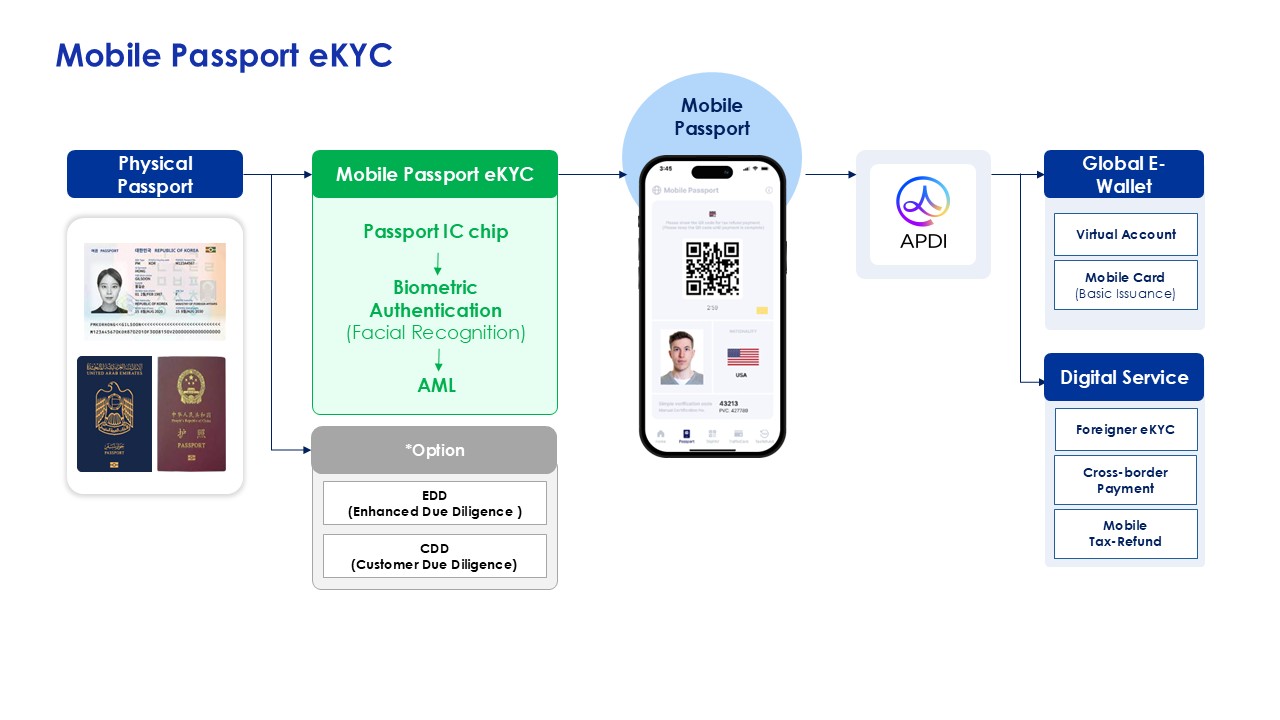
Mobile Passport begins with every traveler's physical passport. The user scans the passport IC chip with their phone, pulling cryptographically-signed data straight from the document. From there:
Once verified, the traveler holds a Mobile Passport credential that can be presented through APDI's interoperability layer to two service categories: a Global E-Wallet (virtual account, mobile card issuance) and a suite of Digital Services (foreigner eKYC, cross-border payment, mobile tax-refund).
One verification. One credential. Many services.
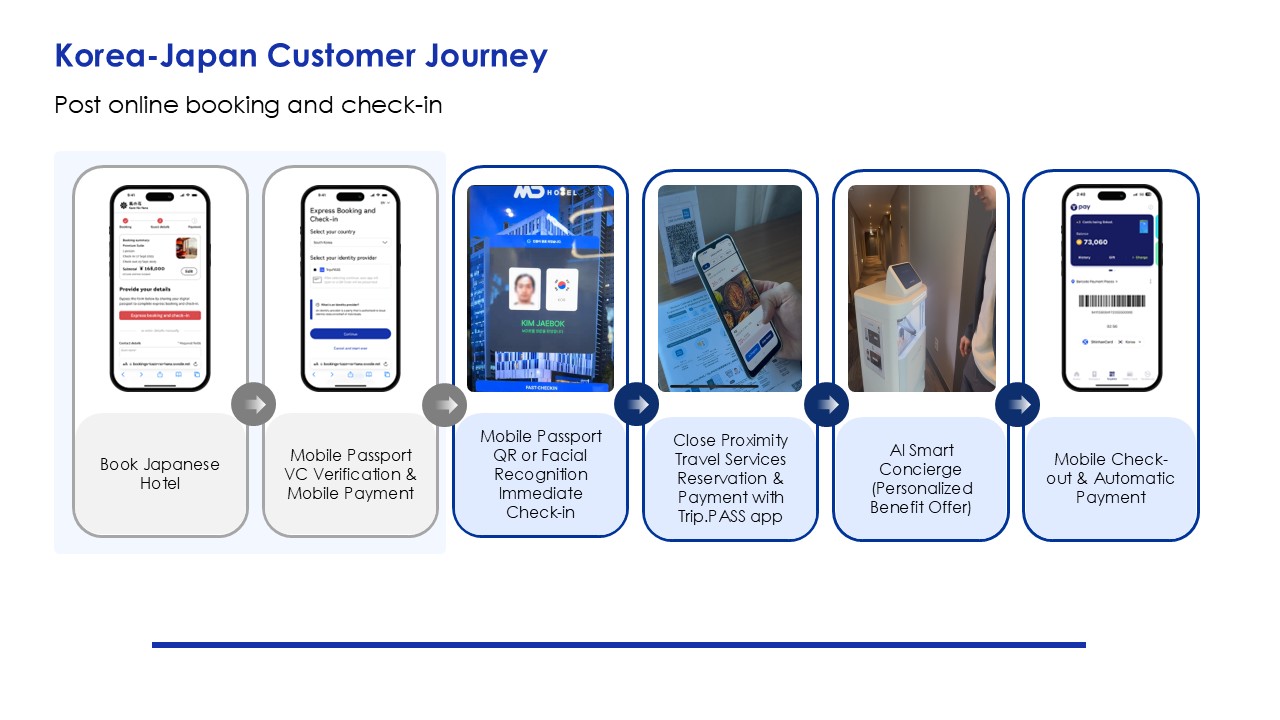
Here's how that translates into a real Korea–Japan trip, post online booking:
What used to be six or seven separate identity checks across airlines, hotels, payment providers, and tax authorities collapses into a single reusable credential, anchored in the user's passport and governed under APDI's trust framework.
This isn't just a Korea–Japan story. It's a working blueprint for cross-border digital identity that respects national sovereignty, uses internationally-recognized credentials (the ICAO-compliant passport chip), and connects to financial and government rails across jurisdictions. For a European audience navigating EUDI Wallet rollouts and cross-border interoperability questions, the lessons translate directly: trust frameworks are built case by case, partner by partner, and the travel corridor is one of the cleanest places to start.
If you're attending EIC 2026, come to our panel on Thursday, May 21: "APDI: Asia-Pacific Cross-border Identity Verification in Action." Expect a candid look at what's been built, what's been hard, and where APDI is heading next, including which corridors come online after Korea–Japan.
Not attending? Follow APDI for updates and reach out if you're working on cross-border identity and want to compare notes. The trust framework gets stronger the more we collaborate.
